Introduction
Discover how a salary sacrifice electric car scheme lowers costs for employees and employers. Learn how EV company car tax benefits and workplace charging boost HR recruitment, retention, and sustainability.
Updated 26 October 2026 with the 2026/27 Benefit in Kind rates and the Workplace Charging Scheme deadline of 31 March 2027.
What is salary sacrifice for electric cars, and how does it work?
Salary sacrifice for electric cars is a government-approved scheme where employees give up part of their gross salary (their pay before any tax or National Insurance is taken off) in exchange for driving a new EV.
Because the cost comes out before tax and National Insurance, employees save money every month. Employers also reduce their National Insurance bill.
For HR, this is a benefit that boosts recruitment, retention, and sustainability — all at once.
How an electric car salary sacrifice scheme works
The process is simple:
- The employee chooses an electric car from the scheme.
- The cost is taken from their gross pay.
- Lower pay means less income tax and National Insurance.
- Employers save on National Insurance contributions too.
The arrangement must be agreed before payroll runs, making it straightforward to manage.
Why salary sacrifice is cost-effective for electric cars
Electric cars are the best option under salary sacrifice because of their low Benefit-in-Kind (BiK) tax rate.
- BiK for EVs is 4% in the 2026/27 tax year (it was 3% in 2025/26) and rises one point a year to 5% in 2027/28, then to 7% in 2028/29 and 9% in 2029/30, so it stays far below petrol and diesel for the whole of a typical three or four year lease.
- Petrol and diesel cars often carry BiK rates between 25%–37%.
Example:
- A £40,000 electric car could cost £600 to £700 a month on a personal lease.
- Through salary sacrifice, the same EV may cost £350 to £450, depending on the employee’s tax band.
This is why electric car salary sacrifice is quickly becoming one of the most popular employee benefits in the UK.
Electric car company car tax benefits
EVs attract far lower company car tax than petrol or diesel models. In plain terms, Benefit in Kind (BiK) is the tax you pay for having a car through work. HMRC takes a percentage of the car’s list price, treats that amount as extra income, and you pay income tax on it at your usual rate. The percentage depends on the car’s emissions, which is why electric cars come out so far ahead.
A worked example, using the 2026/27 rate of 4% for electric cars:
- A £40,000 electric car: 4% of £40,000 is £1,600 of taxable income. A basic rate taxpayer pays 20% of that, about £320 a year, or £27 a month. A higher rate taxpayer pays about £640 a year.
- A £40,000 petrol car at a typical 30% rate: £12,000 of taxable income, so about £2,400 a year for a basic rate taxpayer and £4,800 for a higher rate taxpayer.
That gap is the reason electric cars dominate salary sacrifice schemes. The small BiK charge is the only tax the employee pays on the car, and it is far less than the income tax and National Insurance they save by sacrificing the salary in the first place.
This creates a double advantage:
- Employees enjoy access to a brand-new EV at a reduced cost.
- Employers can show progress on their carbon reduction and ESG reporting.
Benefits of salary sacrifice electric car schemes for employers
HR and business leaders see several gains:
- Reduced National Insurance contributions.
- An attractive benefits package that helps retain staff.
- Positive impact on recruitment — EV schemes appeal to new talent.
- Stronger sustainability credentials for annual reporting.
One HR director recently shared that their EV scheme became the most requested perk within months of launch, outpacing gym memberships and private healthcare.
Workplace EV charging and salary sacrifice
An electric car scheme works best with charging support. Without it, employees may hesitate to switch.
HR teams can strengthen their package by:
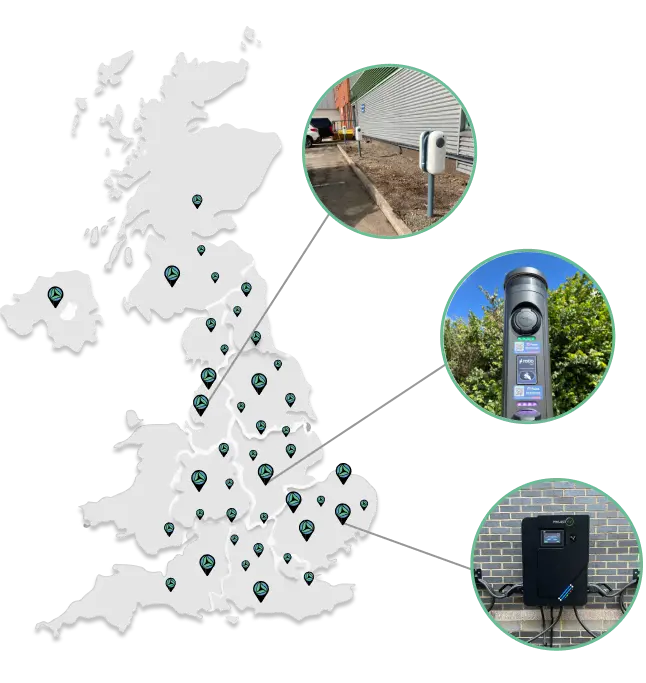
- Installing workplace EV chargers.
- Partnering with a trusted charging provider.
- Offering salary sacrifice for home chargers alongside cars.
Workplace charging not only supports employees but also demonstrates a real commitment to sustainability.
Questions every HR leader should ask
- Does your current benefits package compete with rival employers?
- Could a salary sacrifice car scheme improve staff retention?
- Are you prepared for rising employee demand for EV benefits?
- Do you have the workplace charging infrastructure in place to support adoption?
Key takeaways on EV salary sacrifice
- Salary sacrifice makes electric cars far more affordable for employees.
- Employers save money while strengthening sustainability commitments.
- Low BiK rates make EVs the best choice for company car schemes.
- Workplace charging completes the package and increases uptake.
- A well-designed salary sacrifice car scheme helps HR attract and retain top talent.
Running a company fleet as well? ECC UK also installs fleet and depot EV charging, and our EV charger maintenance team keeps workplace chargers working once they are in.
Add workplace charging to your salary sacrifice scheme
Employees are far more likely to take up an EV salary sacrifice car if they can charge at work. ECC UK designs and installs commercial EV charging for workplaces, handles the DNO application and processes the Workplace Charging Scheme grant of £500 per socket. Start with a free, no obligation site survey.
Book a free site survey Read about our commercial EV charger installation service