Project Overview
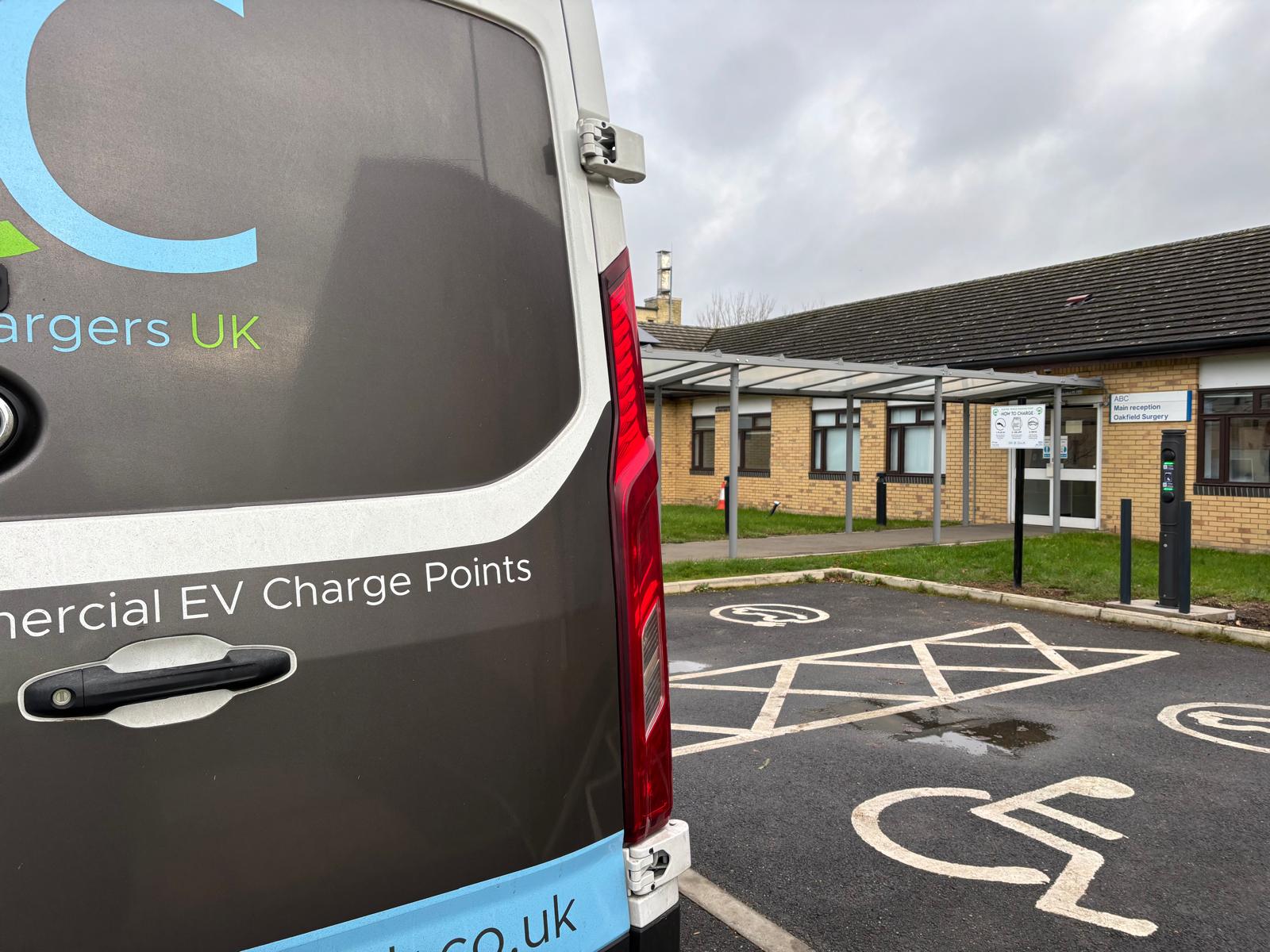
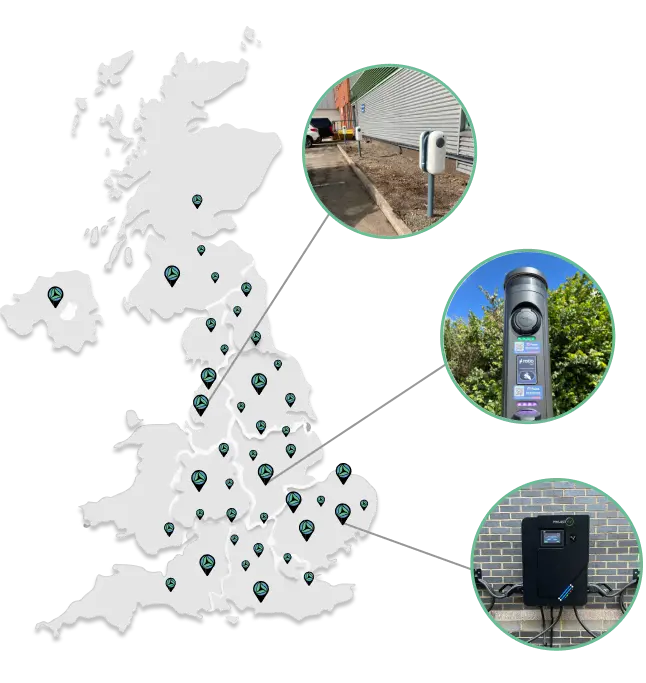
As a nationwide specialist in commercial EV charger installation, ECC was appointed to design and deliver a multi-location EV charging infrastructure project at Newmarket Hospital Suffolk.
The brief was clear: install scalable, revenue-capable commercial EV charging points across four separate locations within a live public sector estate, incorporating integrated pay-to-charge functionality and centralised back-end management.
The solution needed to meet current electrical standards, support public access charging, provide measurable data reporting and allow for long-term expansion as EV adoption increases.
The Challenge
Delivering commercial EV charging infrastructure within a busy healthcare environment required structured planning and controlled execution.
Key project considerations included:
- Installation across four geographically separate areas of the hospital estate
- Continuous site operations
- High volumes of pedestrian and vehicle movement
- Electrical load management across multiple supply points
- Secure integration of pay-to-charge EV chargers
- Future-proofed EV charging infrastructure design
All works were phased to ensure minimal disruption to operational services.
Our Commercial EV Charging Solution
Following detailed electrical surveys and load assessments, ECC delivered a fully engineered commercial EV charger installation, including:
- Installation of commercial-grade Electric Car Vehicle Points (ECVPs)
- Dedicated circuits with RCBO protection
- Structured cable containment and underground ducting
- Smart load balancing across all four charging zones
- Groundworks, bay marking and compliant EV signage
- Inspection, testing and certification to BS 7671
Each location was independently assessed to ensure adequate capacity and allow for scalable EV charger expansion without major network redesign.
This approach ensures long-term asset performance and protects capital investment.
Integrated Pay-to-Charge EV Charging
The installed EV charging points were configured with a secure pay-to-charge platform, enabling the hospital to operate its EV charging infrastructure as a managed commercial asset.
Functionality includes:
- Public and staff access via App
- Configurable charging tariffs
- Secure transaction processing
- Automated revenue reporting by charger and by location
This enables transparent cost recovery while maintaining full administrative control.
Back-End Management & EV Charging Data Capture
A cloud-based back-office management system was deployed to provide centralised monitoring of all commercial EV chargers across the site.
The platform delivers:
- Real-time charger status monitoring
- Energy usage reporting (kWh per charger/location)
- Revenue tracking and reconciliation
- User access control
- Tariff management
- Remote diagnostics and maintenance alerts
- Carbon usage and sustainability reporting
For public sector organisations, this level of EV charging data capture supports:
- ESG and carbon reduction reporting
- Grant compliance documentation
- Utilisation trend analysis
- Evidence-based infrastructure planning
- Return on investment tracking
The system transforms EV charging infrastructure from a utility cost into a measurable operational asset.
Compliance & Governance
All commercial EV charger installation works were completed in accordance with:
- BS 7671 IET Wiring Regulations
- UK commercial electrical safety standards
- Relevant OZEV guidance (where applicable)
- Site-specific health and safety protocols
Risk assessments and method statements were agreed prior to commencement, with coordinated scheduling to protect operational continuity.
The Outcome
- Commercial EV chargers installed across four estate locations
- Fully operational pay-to-charge EV charging system
- Centralised monitoring and performance reporting
- Scalable, future-ready EV charging infrastructure
- Safe delivery within a live public sector environment
Newmarket Hospital now benefits from professionally engineered commercial EV charging infrastructure in Suffolk, supporting sustainability objectives, operational transparency and long-term estate planning.